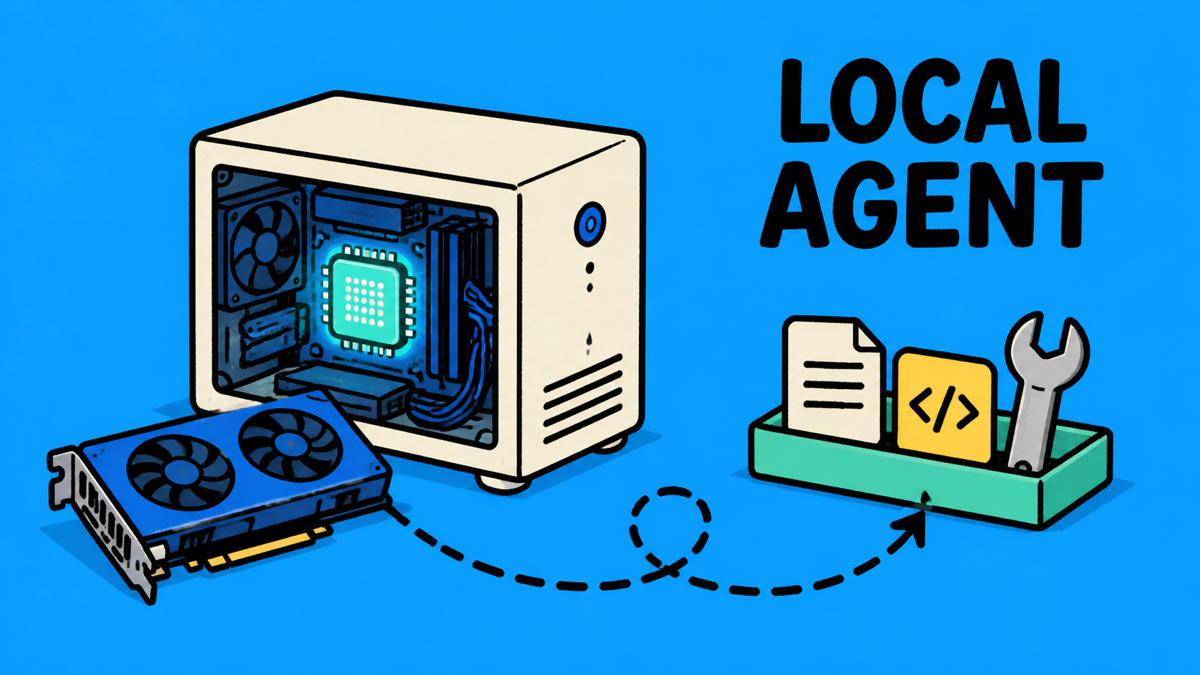
On August 10, 2026, Meta AI Research introduced Muse Glimmer, a 30-billion-parameter open-weight model designed for local agent workflows. Meta says it can run on a Mac or PC with a single consumer GPU. The important choice is not only the model size. It is the decision to treat a local, always-on agent as a product target.
What Meta actually released
Meta says Muse Glimmer is optimized for always-on local agents, function calling, local coding, and LLM-as-a-judge evaluation. The weights are available on Hugging Face under the Apache 2.0 license, alongside developer documentation. Meta also reports strong performance against leading models in the same size category. That last point is a company-reported benchmark claim, not an independent evaluation.
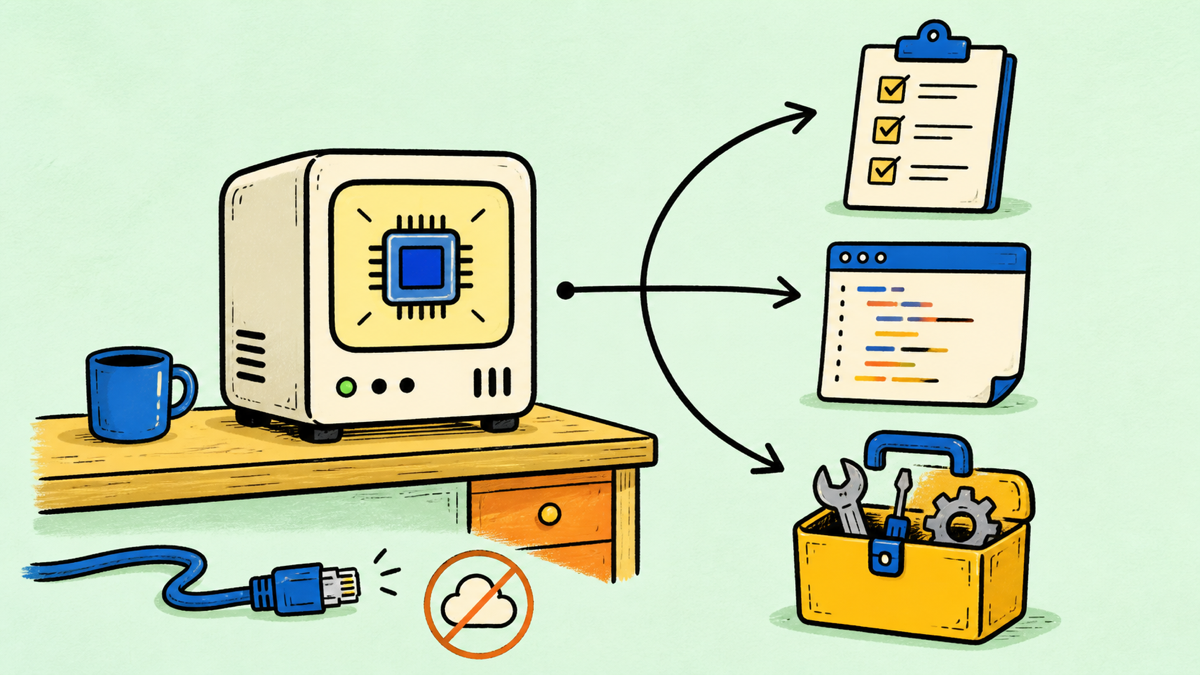
The local-agent story is not just about inference. It is about what the machine can do after the model produces a decision.
The official announcement makes several promises that should not be collapsed into one:
| Claim | What it means for a reader |
|---|---|
| Open weights | Developers can inspect and run the released weights under the stated license. |
| Local agent focus | The training and evaluation target includes tool use, long-horizon work, and local coding. |
| Single consumer GPU | The deployment target is more concrete than “runs locally,” but actual speed depends on hardware and quantization. |
| Strong benchmark results | The numbers are useful for choosing experiments, not proof of success on a private workflow. |
What “one consumer GPU” actually means
Meta says a full-precision 30-billion-parameter model would need more than 55 GB of memory. Its roughly 4-bit quantized release can fit the model under 20 GB, and the company reports a 17 GB K-Quant configuration tested with a drafter on 24 GB and 32 GB hardware. Those details make the local target more plausible, but they are still the provider’s measurements. A developer must check memory headroom, latency, thermals, and tool-call behavior on the machine that will run the agent.
The advantage is concrete: a local model can work inside a private network, during an internet outage, or without sending every prompt to a hosted API. It may also reduce network round trips for short tool-driven tasks. These are properties of a deployment design, not privacy guarantees supplied by the model alone.
Local does not automatically mean private
A local model can still call cloud tools, upload files, or write sensitive data to an unprotected memory store. The runtime, tool permissions, logs, backups, and update path determine where information travels. Running the model on a personal machine removes one service boundary, but it does not remove prompt injection, unsafe tool use, credential leakage, or a bad action loop.
Muse Glimmer therefore looks less like a finished local assistant and more like a capable component for a local agent stack. Before adopting it, I would measure memory use at the chosen quantization, latency across repeated tool calls, recovery after a tool error, and the boundary between local and networked operations. I would also record what the agent remembered and changed, not only whether it returned a fluent answer.
The significance of Muse Glimmer is not that every agent will move to a desktop GPU. It is that a major model provider is packaging local, always-on agency as a first-class target and releasing the weights for others to build around. The next competition will be measured not only by model quality, but also by how clearly a local agent can explain what it used, what it changed, and what never left the machine.