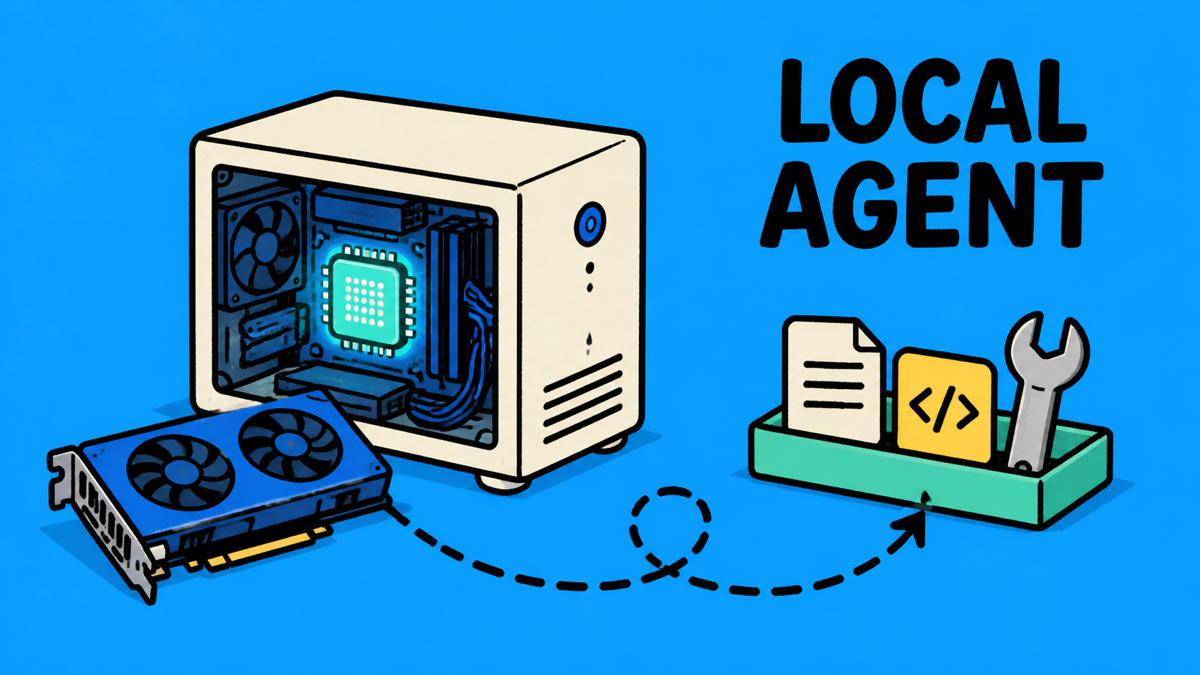
GLM-5.2 has drawn renewed attention for more than its improved performance. It demonstrates both how quickly open-weight models are catching up with closed frontier models and what happens to control over safeguards once those capabilities are made public.
When Z.ai released GLM-5.2 in June 2026, it emphasized the model’s 1M context window, long-horizon task capabilities, and coding performance. The model weights were released under the MIT License, allowing anyone to download, run, or modify them. These are claims from Z.ai’s official announcement. The performance claims made by the model’s developer, however, need to be considered separately from the risks identified through independent evaluation. Z.ai’s official announcement
The performance gap has narrowed to a matter of months
In an independent evaluation published on August 2, SaferAI assessed GLM-5.2 using benchmarks related to the four systemic-risk domains defined by the EU’s General-Purpose AI Code of Practice. According to the report, results varied by domain, but in some cybersecurity and biological-risk evaluations, GLM-5.2 performed at levels close to frontier models released only a few months earlier. Its cybersecurity results were comparable to models released roughly two to four months earlier, while its biological-risk results were comparable to models released about two months earlier. A comparatively larger gap remained in software engineering.
This should not be read as evidence that GLM-5.2 is equal to closed models across every task. SaferAI described the findings as a preliminary evaluation that covered only a subset of public benchmarks and did not issue an overall risk assessment. SaferAI’s evaluation report
Even so, the implication is clear. Open-weight models are no longer alternatives that lag far behind in the performance race. For certain tasks, they now need to be compared directly with top models from only a few months earlier. Drawing on the evaluation, TechCrunch likewise concluded that the capability gap for open-weight models is narrowing while the safety gap remains. TechCrunch’s related coverage
Similar performance does not mean similar safeguards
Providers can apply several layers of control to a closed API. Examples include training the model to refuse harmful requests, request classifiers, usage limits, account suspensions, and model updates. Because users cannot directly access the model weights, it is difficult for them to bypass every policy set by the provider.
Open-weight releases work differently. Users who download a model can run the weights in their own environment, fine-tune them, and add their own system prompts and policy layers. In SaferAI’s public API tests, the model did not refuse offensive cybersecurity or biological-risk requests. The report also noted that safeguards on open-weight models can be removed during self-hosting.
There is an important distinction here. A model’s failure to refuse a request does not mean it can successfully carry out a real-world attack. Conversely, a refusal in an API does not mean the same control remains in downloadable weights. Model capabilities and control over the deployment environment are separate dimensions.
Benchmark numbers need to be read alongside the evaluation harness
What stands out in the report is not the model’s score alone, but how much the result changed with the evaluation conditions. For example, the CyberGym reproduction rate increased from 36.6% to 76.2% when the token budget rose from 2M to 50M. The same model can produce very different results depending on how long it is allowed to reason, which tools it can use, and how success is defined.
A single benchmark number is therefore not enough to determine a model’s real-world risk. The ability to solve capture-the-flag challenges is not the same as the ability to attack several systems in a real organization over an extended period. Conversely, a low score on one benchmark is not proof that a model is safe in practice. Meaningful comparison requires disclosure of the evaluation target, prompts, token budget, tool permissions, network conditions, and success criteria.
The report does not conclude that GLM-5.2 is dangerous. It is better read as a signal that independent replication and evaluations based on more realistic scenarios are needed.
The advantages of open weights are also clear
Describing open weights only as a safety problem overlooks important benefits. Running a model directly allows an organization to evaluate sensitive code or internal documents within its own infrastructure instead of sending them to an external API. It can pin the model’s behavior, adapt it to particular languages and workflows, and reduce its dependence on a provider’s pricing or policy changes. Security researchers also gain access to evaluate the model itself and develop defensive tools.
The issue is that these benefits come with safety responsibilities. Operators cannot wait for a provider to update refusal policies, and weights are difficult to recall after a model has been released. Some of the freedom users gain becomes a cost that operators must bear by implementing their own controls.
What developers should prepare first
If I were introducing an open-weight model such as GLM-5.2 into real work, I would check the following in this order:
- Build a separate evaluation set for our own data and workflows rather than relying on public benchmark scores.
- Test requests involving offensive security, personal data, and confidential information separately from ordinary tasks.
- Do not treat the model’s refusal language as a security boundary; restrict network, file, shell, and cloud permissions independently.
- Record tool calls and external transfers, and require human approval for high-risk operations.
- Preserve the model card, license, source of the weights, and any modifications alongside the deployment artifact.
- Do not treat the risks of self-hosting and a provider-operated API as identical.
Permission design matters more than model intelligence when the model is connected to an agent. No matter how capable a model is, if it can freely use a shell and the internet while accessing a production database, its safety depends on luck rather than benevolent intent.
The question has changed in the open-weight era
Open models used to be chosen mainly for cost or accessibility. Now that their performance has advanced far enough, the question is changing. What matters more than how close a model is to the frontier is how its capabilities will be constrained and audited in our own environment.
GLM-5.2 shows the potential of open-weight models while also demonstrating why safeguards cannot be left entirely to a provider’s API. I do not read this case as an argument for banning open models. I read it as a signal that organizations using public weights need to make their own evaluations, permission boundaries, action logs, and incident response procedures part of the product.
As the performance gap narrows, closing the safety gap is no longer a task for model companies alone. It becomes an operational responsibility shared by the developers and organizations that download, connect, and deploy the model in their work.