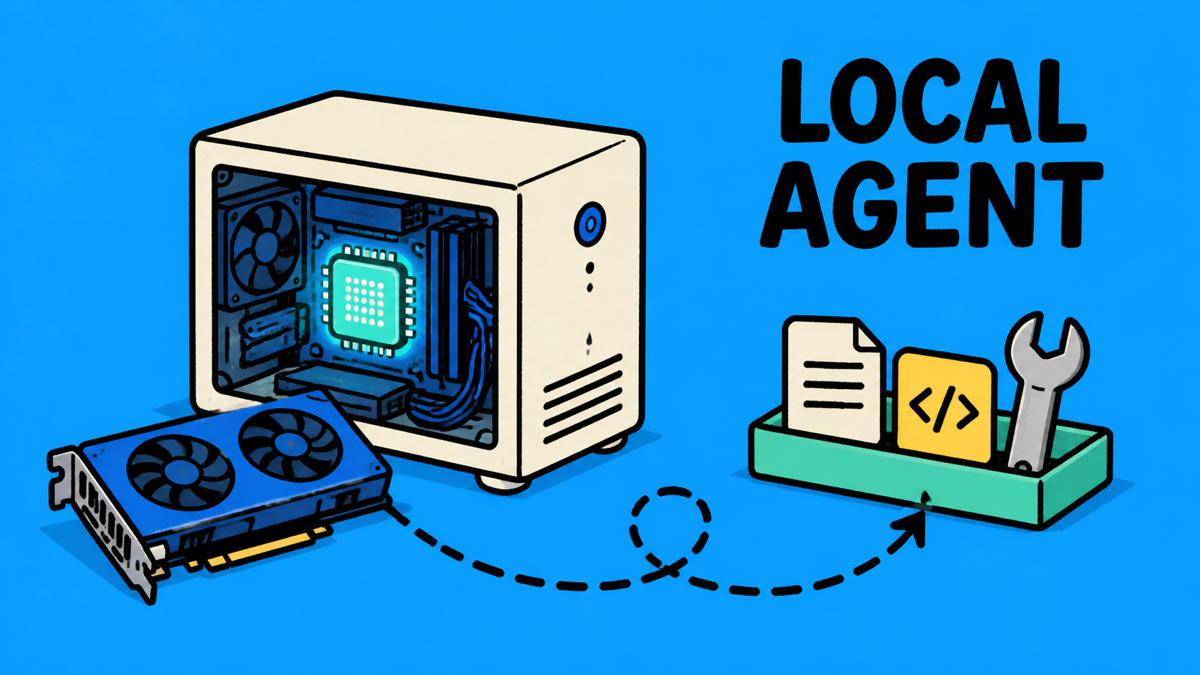
AI model discussions usually begin with a simple question: which model is smarter? Needle 2 makes a different question harder to ignore: where can a model actually fit, and what job is narrow enough to run there reliably?
Needle 2 is described by Cactus Compute as a 45-million-parameter model for tool calling, device use, and structured extraction. The whole model is a single 14 MB binary, and the repository says a full session uses about 28 MB of RAM. That is a different target from a general-purpose chatbot that tries to discuss every topic.
A narrow contract can matter more than a small number
Needle 2 treats an agent action as a constrained contract. The input is ordinary text, but the output is structured data that must match a declared tool schema. The public repository describes byte-level grammar constraints, confidence scores, tool retrieval, and a 256-token sliding window. When no declared tool fits a request, the model can return an empty call instead of inventing a free-form answer.
| Design choice | Practical consequence |
|---|---|
| Structured output | The host system can validate a tool call before executing it. |
| Byte-level grammar | The model is constrained by the schema instead of only being asked to obey it. |
| Confidence score | The product can choose when to act and when to escalate. |
| Tool retrieval | A large catalogue does not have to be exposed in full on every turn. |
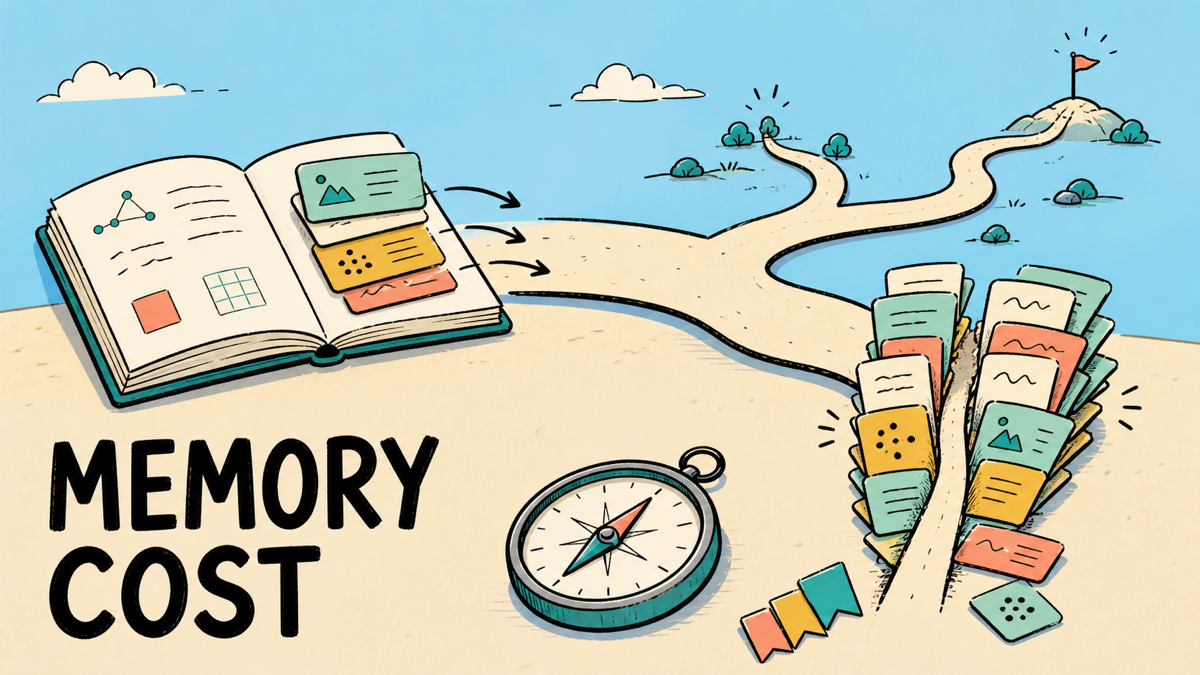
| Bounded context | Memory use can remain predictable as a conversation continues. |
These choices matter more than the parameter count alone. A model that turns “make the room cooler” into a valid thermostat call does not need the same world knowledge as a model that writes an essay about climate systems. Narrowing the job makes local execution, predictable output, and low memory use easier to design together.
The destination becomes part of the model design
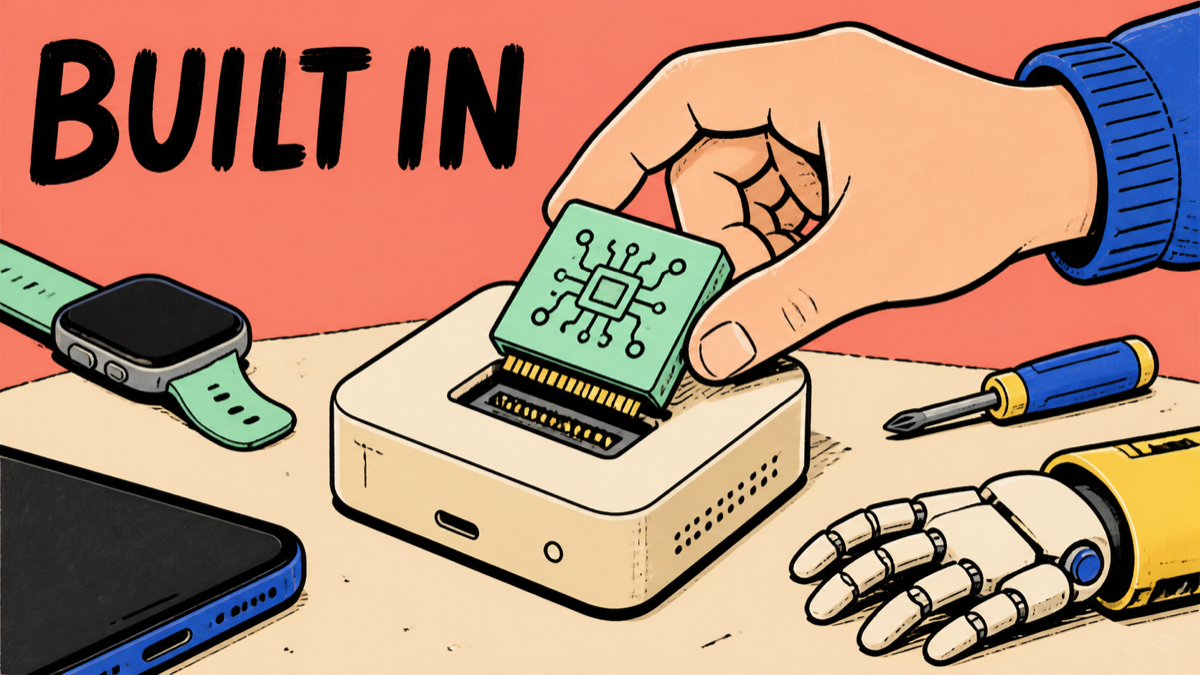
The larger possibility is not simply that one small general model will run on a phone. Specialized LLMs can be made for the places they are meant to enter. A watch might need health events and short voice commands. A car might need cabin controls and navigation intents. A home device might know only its appliances, schedules, and safety boundaries. A robot might map language to a small set of permitted movements.
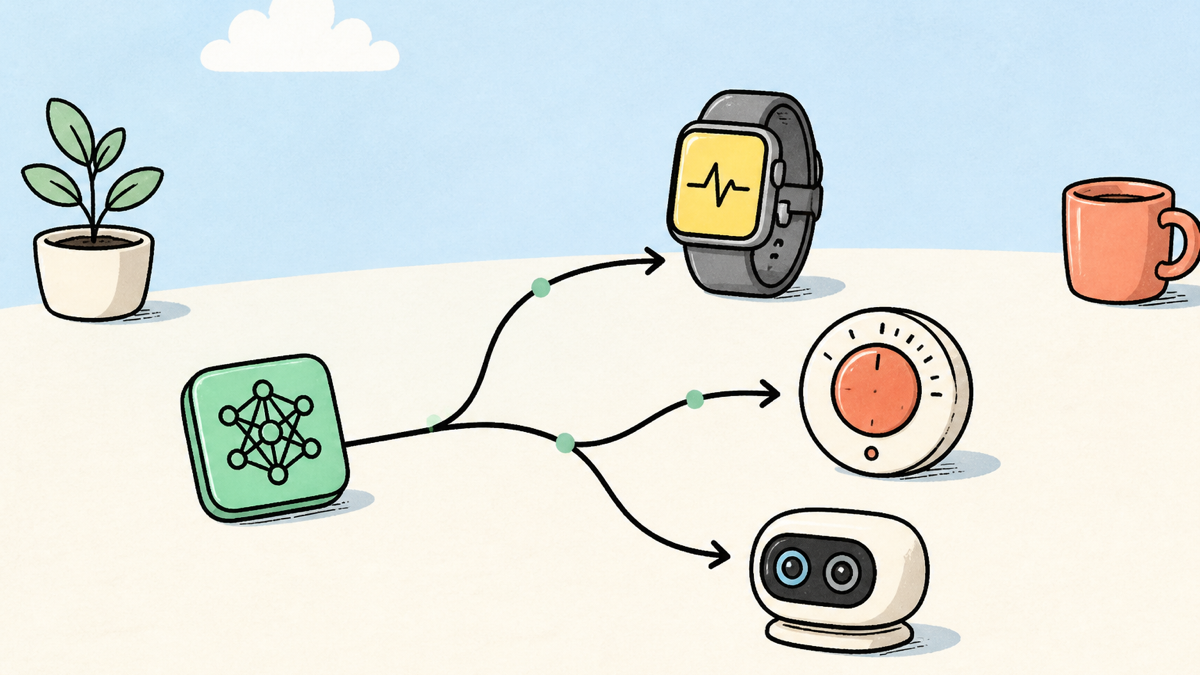
The same idea can be packaged differently when the model is built for a specific endpoint.
That is an interpretation of the direction, not a claim that Needle 2 already provides all of these products. The point is that “the model” can become a component selected by destination. When it is small enough to live inside a device, a product team can optimize for latency, battery, sensors, vocabulary, and failure policy instead of wrapping a large model in another API.
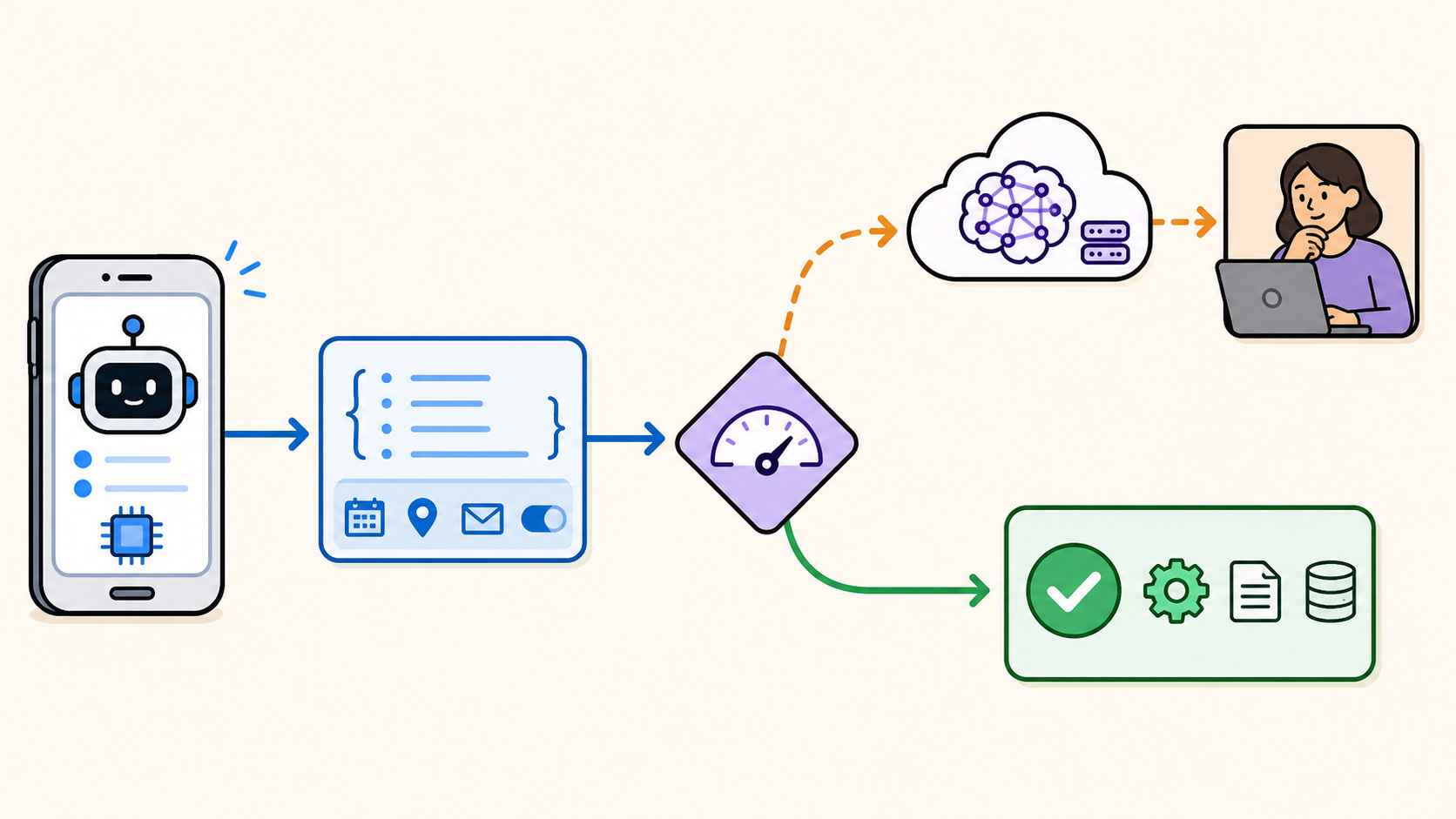
An on-device model’s role includes the boundary between making a call, verifying it, executing it, and escalating it.
Local needs an escape hatch
Local execution does not mean every request should stay local. A practical system can let a small model handle predictable actions and send ambiguous or high-impact requests to a larger model or a person. Needle 2’s confidence-gated behavior points toward this boundary: act above a chosen threshold and escalate below it. The threshold, tool permissions, and verification rules still belong to the product that embeds the model.
What to test before shipping it in a device
Before putting a small model into a product, collect failure scenes before optimizing average latency. Put an unambiguous request such as “turn on the light,” a request that needs interpretation such as “make it a little less cold,” and a request naming an undeclared device into the same test set. For each one, record whether the result was a valid call, an empty call, or an escalation. This makes the model’s boundary visible instead of hiding it behind natural-language output.
Schema changes deserve their own scenes. When a tool field or allowed range changes, check whether old calls remain valid, whether an invalid field is rejected before execution, and whether the model tries to fill an unknown field anyway. Structured output protects the executor, but it does not decide the schema version or the policy for a validation failure.
Offline operation and an unavailable escalation path are also normal test inputs. When the network is down, the product must decide whether a local request can continue, whether it should ask the user for confirmation, or whether an already-created call should be discarded. A confidence score should not be the only signal for automatic execution; high-impact actions may need tool-specific checks and a human approval condition.
The goal is not to prove that Needle 2 is the best model for every device. It is to expose the error types and escalation cost a product can tolerate, turning “small enough to use” into “bounded enough to verify under this contract.”
Before adopting a small model, I would measure four things separately:
- whether confidence tracks actual tool-call correctness;
- how often a schema or tool description causes an invalid action;
- whether escalation preserves enough context for a larger model or a human;
- how the system behaves when the local model, tool, or network is unavailable.
There are costs. Small models can be brittle outside their intended tool set. If every device gets its own tuned model, teams inherit the work of evaluating, updating, logging, and eventually deleting those models. “On-device” moves responsibility closer to the product; it does not remove it.
Needle 2 is interesting because it makes the endpoint part of the model design. The future may not be one best LLM floating above every application, but many compact specialists sitting inside watches, cars, appliances, robots, and local agents. The useful question becomes less “Which model wins?” and more “Which model was built to fit here, under these constraints?”