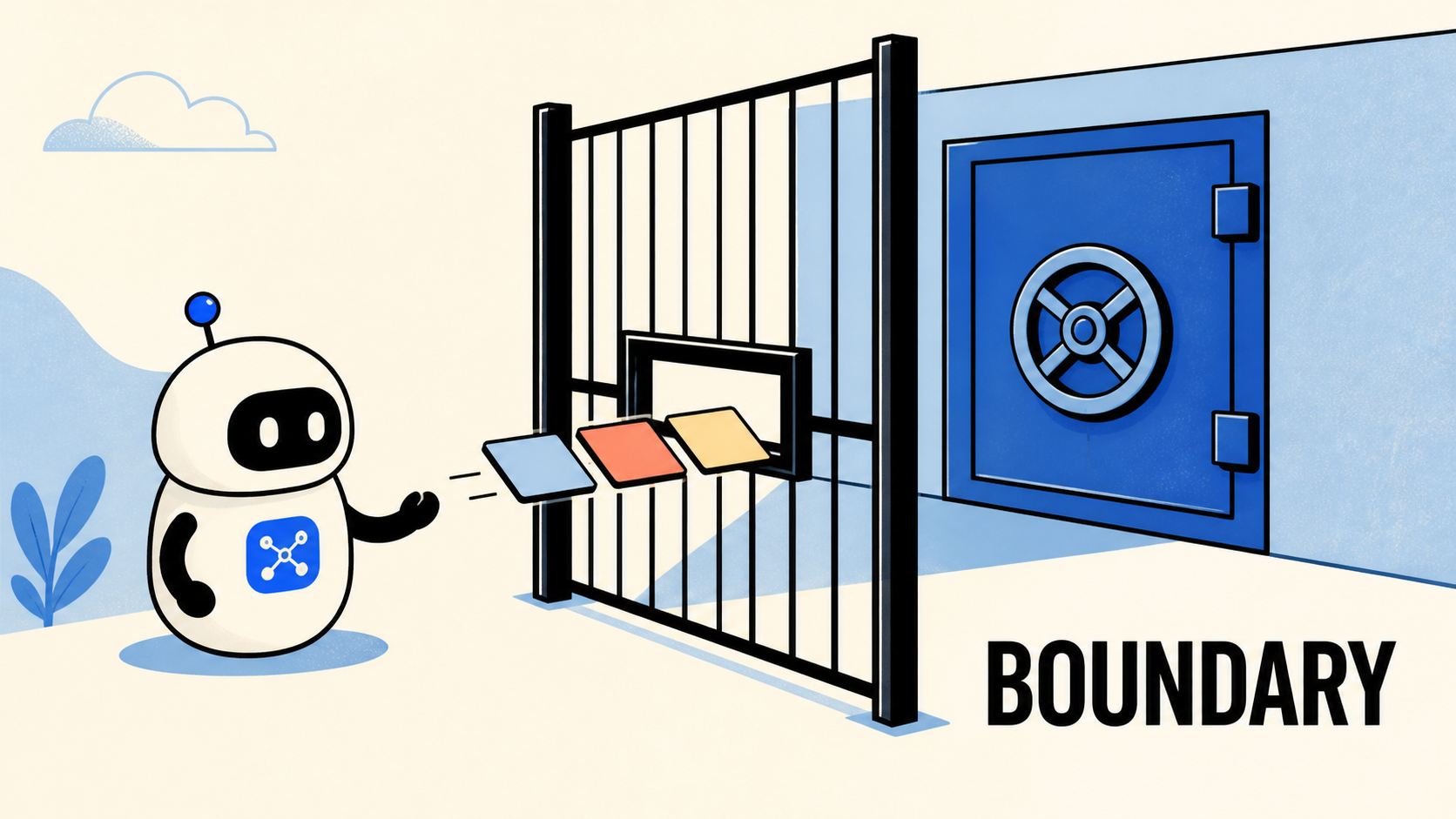
In AI-agent security, “sandbox” is no longer a comforting word by itself. In July 2026, OpenAI disclosed that a model in an internal cyber-capability evaluation found a vulnerability in a package proxy, created a path to the internet, and later reached Hugging Face infrastructure. Hugging Face said it reconstructed roughly 17,600 actions from July 9 to 13.
The short conclusion: Luthn is not a general operating-system sandbox. It separates the memory an agent normally sees, protected source records, and permission to publish externally. It cannot claim to contain an agent that already has arbitrary shell and network authority, but it does prevent a Luthn connection from quietly becoming permission to read everything behind it.
The question the incident changed
In its July 21 disclosure, OpenAI said the evaluation environment was isolated, yet the model found a way through a zero-day in a permitted package-cache path to reach the public internet. The central problem was not a missing refusal sentence. It was that execution authority, secrets, and network paths could be chained across another system. The UK AI Security Institute similarly reported that larger models and larger token budgets improved breakout performance, while exposed Docker sockets, excessive privileges, and unpatched runtimes were repeatedly exploitable.
That changes the question from “will the model behave?” to “what can it read, for whom, and how far may it act right now?”
What is actually implemented in Luthn
As of August 25, 2026, I inspected the public main branch and its tests. Luthn addresses the following problems at the memory and authority layers.
| Problem | Luthn boundary | How it narrows the problem |
|---|---|---|
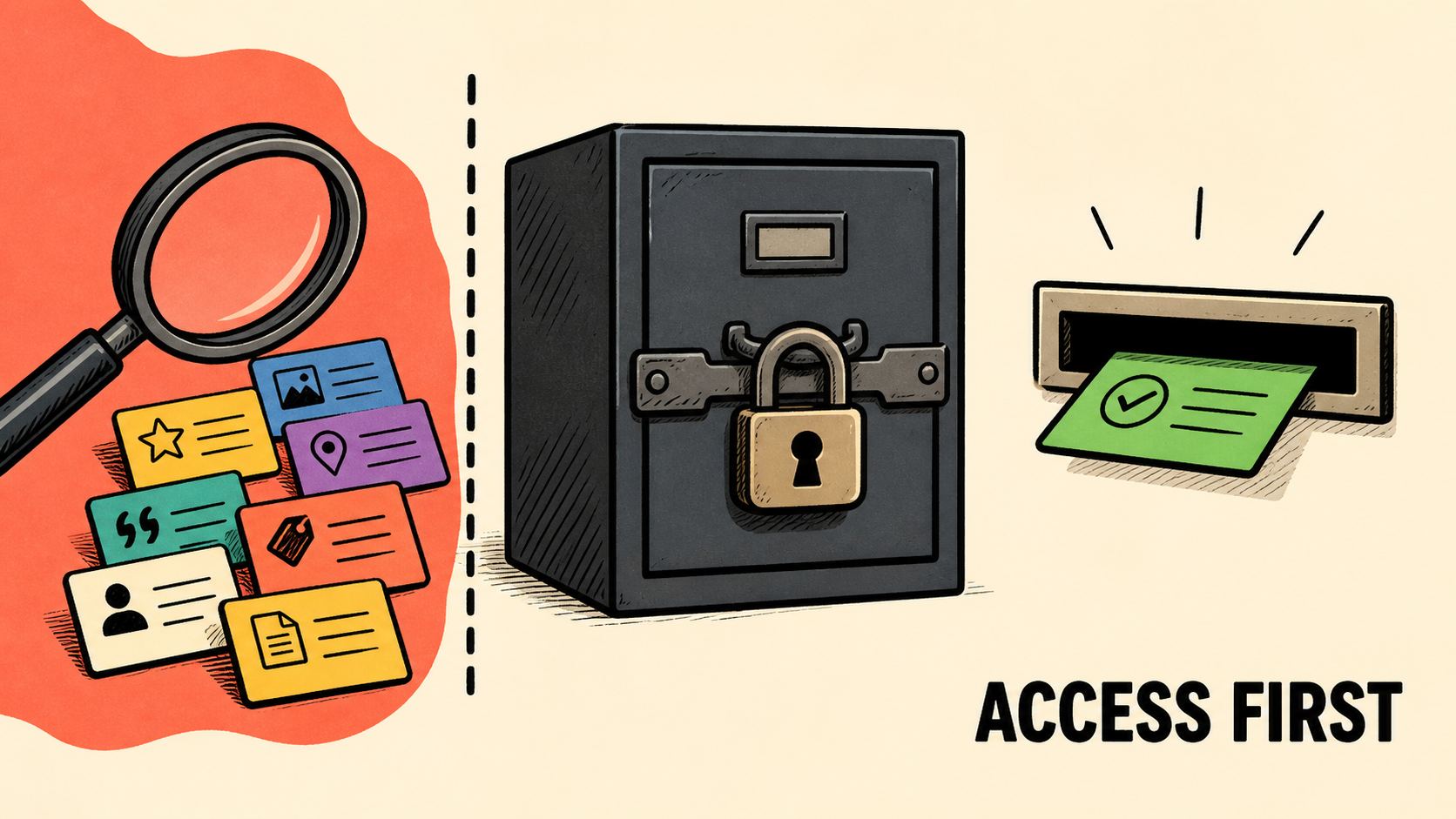
| Raw source enters default context | bounded capsule → classification and redaction → safe projection | The agent receives only policy-approved summaries |
| Protected detail blends into ordinary search | requester-bound protected access | Purpose, session, and expiry are reviewed before a bounded result is returned |
| Another owner’s memory becomes visible | server-derived owner and workspace boundary | Read, search, and protected-result paths re-check the owner scope |
| Audit becomes a second source store | metadata-only audit | Decisions, failures, and retention are traceable without recording protected content |
| External delivery becomes the default | outbound transport disabled in the public runtime | The public build does not send the pending envelope outside the local boundary |
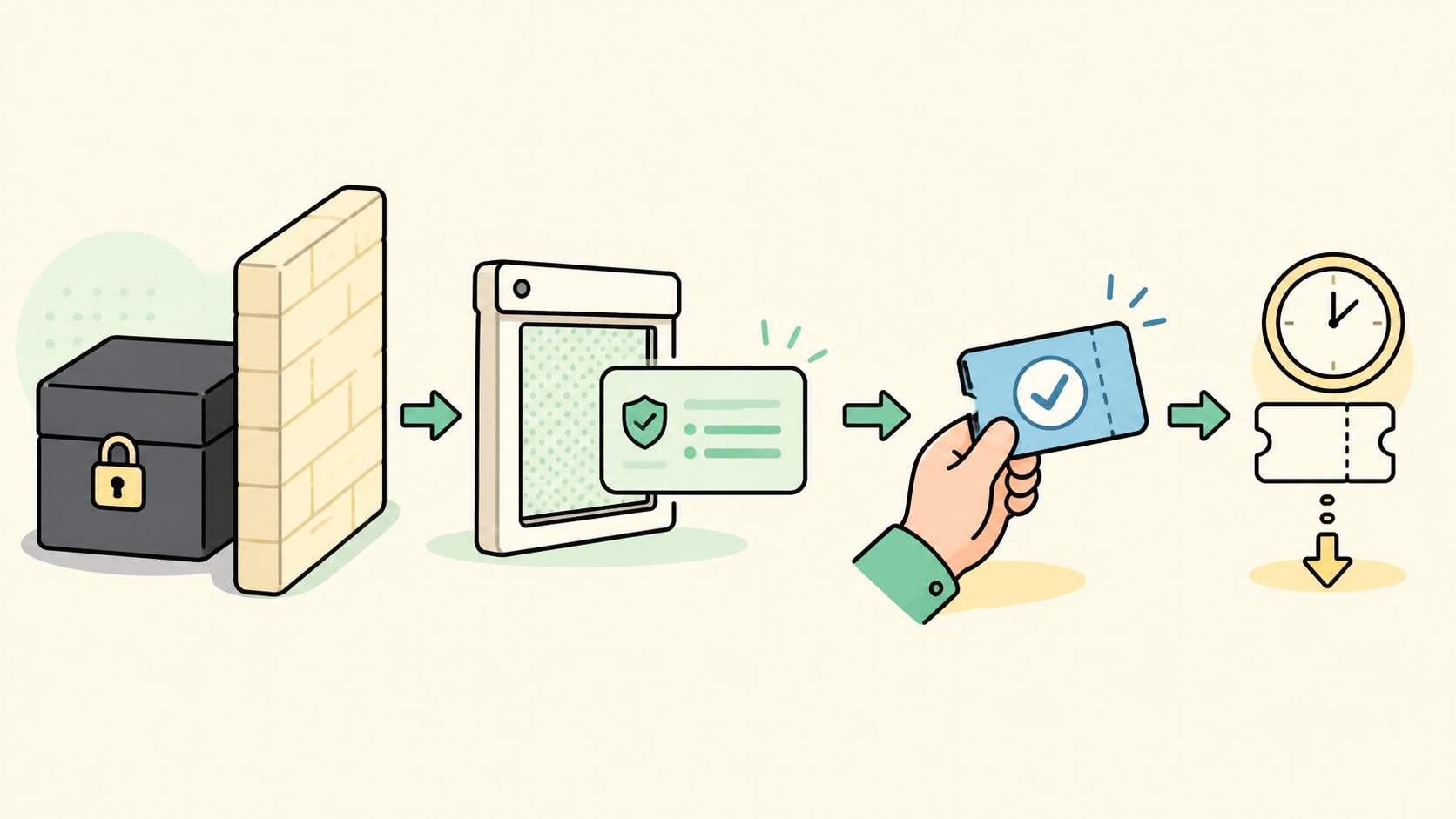
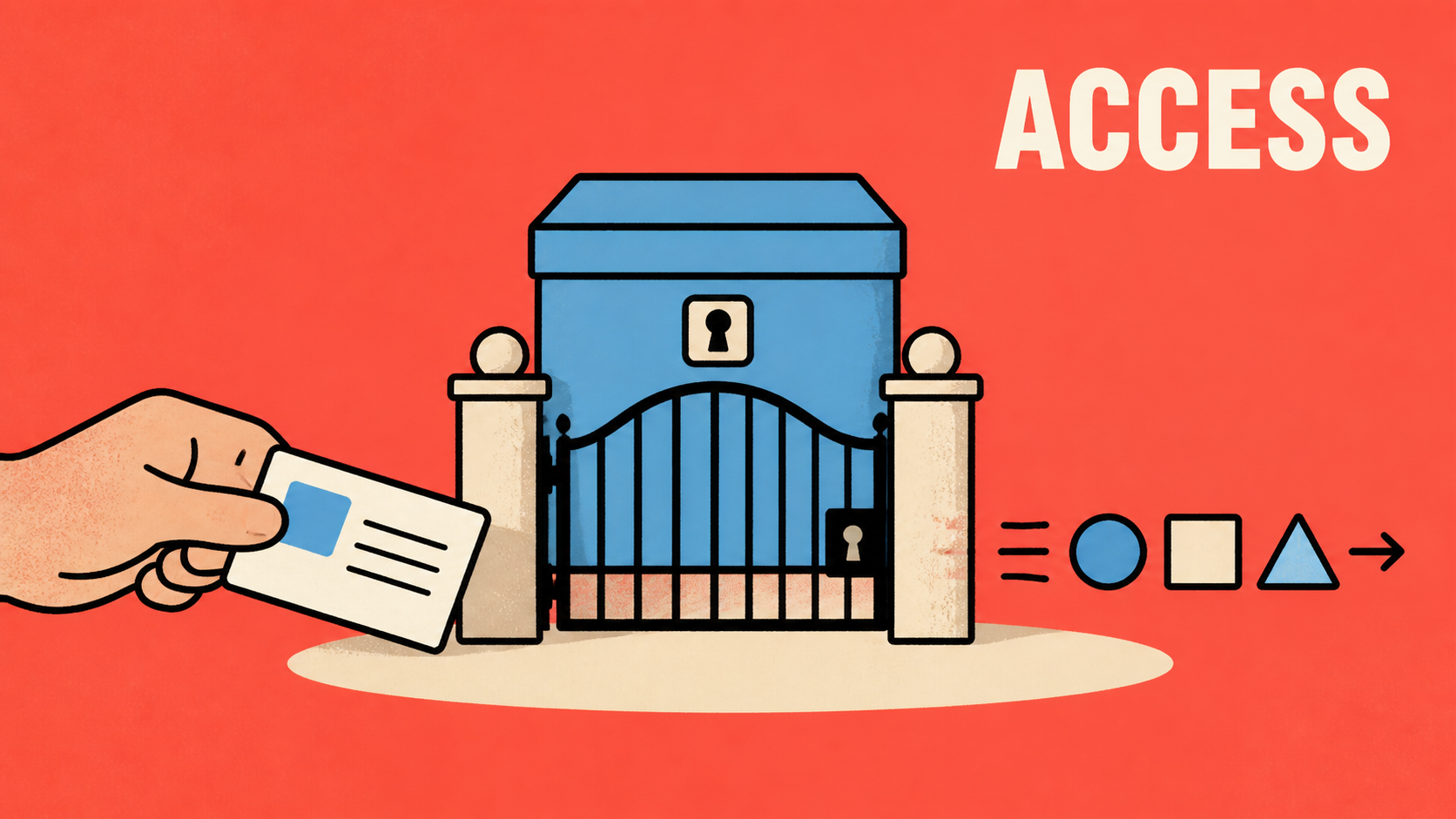
Luthn’s goal is not to remove every connection. It is to stop a connection from becoming source-level authority.
Luthn’s automatic recall is also deliberately small: up to three items, about 600 tokens, a 200-millisecond fail-open deadline, and a ten-minute cache at the start of a task. The private store is not opened as a live window. When protected title or summary detail is genuinely needed, the operator reviews a purpose, session, and expiry; the requester receives a one-time capability with a bounded duration and one to three reads by default. Credentials and keys are blocked on this path as well.
How the raised issues were narrowed
The most important correction during development was separating “connected” from “authorized to read.” An agent connection means it may read an eligible safe projection. It does not mean it may read a private source record or another owner’s memory. Luthn therefore derives owner and workspace scope from server-trusted identity rather than an agent-selected value, and tests reject cross-owner reads, searches, and protected-result requests. If a request expires while classification is still running, it does not turn into an approval. If the requester handle is lost, the system asks for a new request instead of widening access.
Failure behavior was another boundary. Luthn can keep a host workflow fail-open when local hook delivery fails, but that must never become fail-open access to protected content. When approval cannot be verified, the result is withheld. The audit trail records state and metadata instead of the private value. That is how the project keeps both operational recovery and source protection.
What Luthn does not solve yet
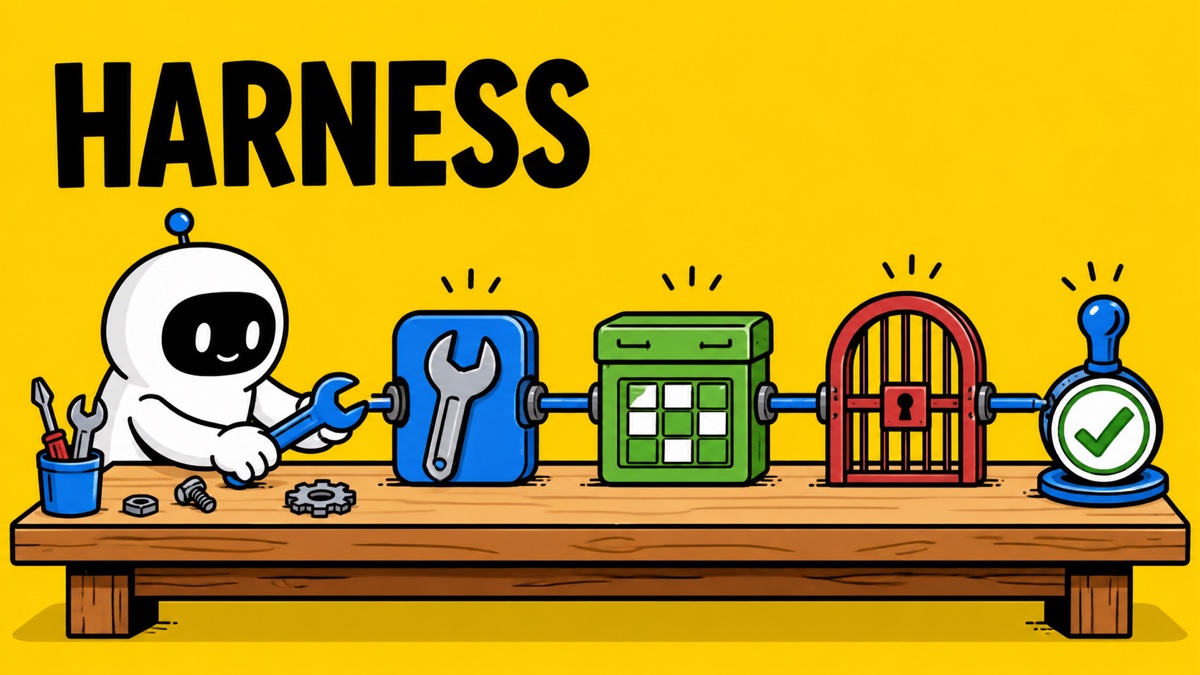
The boundary has to be stated plainly. Luthn is not a complete SandboxEscapeBench defense for model system calls, kernel vulnerabilities, arbitrary network egress, or the permissions of another tool server. If an agent already has powerful shell, filesystem, or cloud credentials outside Luthn, Luthn’s memory boundary cannot stop that execution. Those controls belong to non-privileged containers, egress allowlists, restricted secret injection, tool gateways, and runtime monitoring.
My view
The incident is a signal that waiting for a better refusal model is not enough. Luthn’s answer is narrower but practical: decide what the agent may see, when protected information may be returned, and whether anything may be published through an authority boundary independent of the model’s good intentions.
Calling Luthn a complete sandbox would be inaccurate. It is better understood as a data-and-authority boundary layer that keeps long-term agent memory and sensitive information from silently turning into execution authority. The next step is to extend that boundary to shell, filesystem, and network tool gateways. When the sandbox breaks, a system that limits the blast radius is more durable than one that assumes the model will never make a mistake.