SpaceX’s acquisition of Cursor has changed the shape of the AI competition. In an SEC filing dated June 16, 2026, SpaceX agreed to acquire Anysphere, the company behind Cursor, for $60 billion in stock. Reports said the acquisition closed on August 14. SEC merger filing
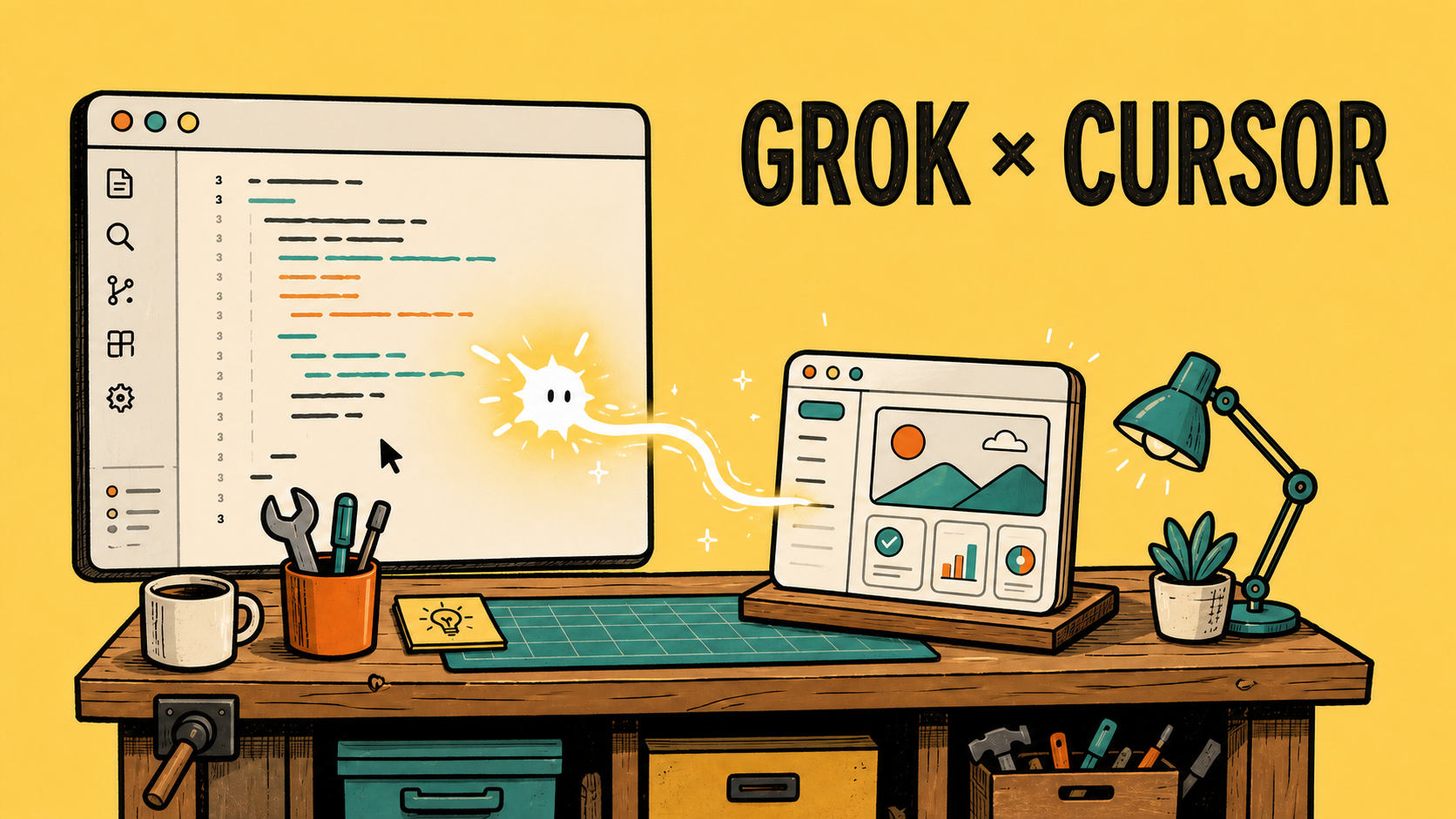
The deal matters because Cursor is more than a code editor. It connects files, tools, tests, and deployment inside an agent workbench. With xAI and Grok already inside SpaceX, the acquisition brings models, compute, agents, and user access closer together.
Grok 4.6 was not just a chatbot update
Cursor announced Grok 4.6 with SpaceXAI on August 12. The focus is an agent that can sustain codebase analysis, research, synthesis, and application building across several steps. It is available in Cursor, Grok Build, and through the SpaceXAI API. Grok 4.6 announcement
Cursor says Grok 4.6 matched GPT-5.6 Sol on the Artificial Analysis Intelligence Index. That is a composite score reported by Cursor, so it is not proof that Grok is best at every task. It is, however, a signal that Grok is becoming a serious competitor in coding and knowledge-work agents.
Cursor’s real asset is the harness
When Cursor introduced Grok 4.5, it said the model had been trained jointly with SpaceXAI and that codebase and developer-tool interactions informed the work. The important asset is not only data. An agent needs a harness that chooses files and commands, recovers from errors, and knows when to stop. Cursor provides that structure and interface around the model.

Model capability becomes useful work when code, tools, and tests are connected.
This loop could make Cursor better as the model improves. The conditions under which developer code and usage records are stored or used for training still need separate scrutiny.
How might Cursor change?
Grok Bot could handle conversation and research, Grok Build could turn ideas into applications, and Cursor could work against real codebases and deployment. If it absorbs Grok 4.6’s emphasis on web development, documents, and data analysis, Cursor could widen from an editor into an environment for producing complete results.
SpaceX may put Grok at the center, but it still needs to preserve a broader model router and user choice. Forcing every workflow through Grok could weaken Cursor’s neutrality. This is an interpretation of the product structure, not an announced roadmap.
Speed also creates control problems
The faster this system moves, the more carefully it has to be checked. Cursor warned that some Grok 4.5 CursorBench results may have benefited from training data that included an earlier Cursor snapshot. Grok 4.6 should be tested against real repositories. The practical questions are whether users can switch models, control data use, audit agent commands and file changes, and safely stop and recover long tasks.
Grok 4.6 shows how much stronger Cursor could become. But the result will depend less on a model score than on Cursor’s product philosophy. If it remains a workbench connecting developers with several models, it could take a major step forward; if it narrows into one ecosystem, dependence will deepen. The question is who controls the way that intelligence is used inside Cursor.