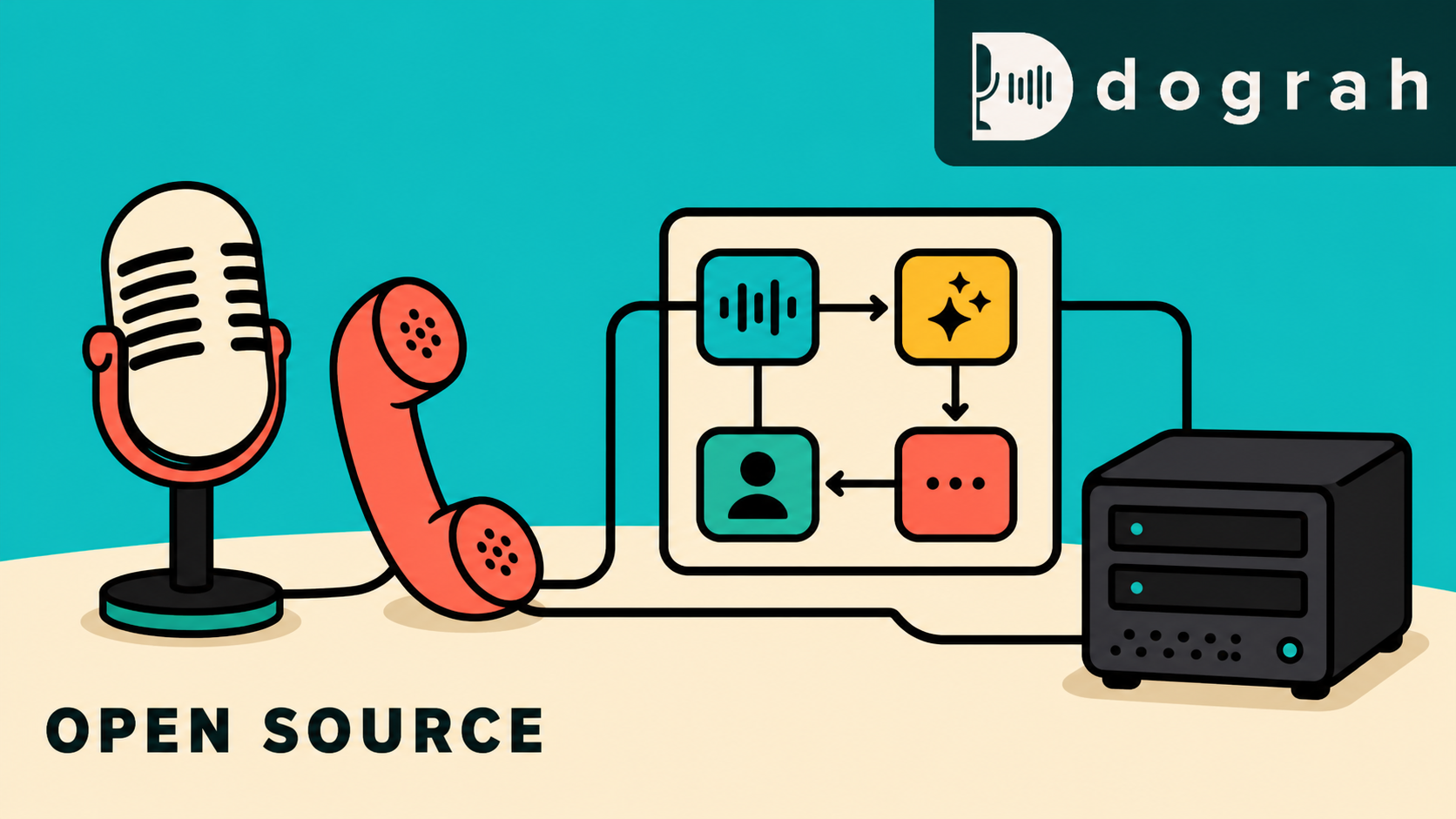
Dograh presents itself as an open-source, self-hostable alternative to Vapi and Retell. Its official site calls it open-source voice infrastructure and says it can run on your own servers or inside your cloud VPC. That is a meaningful promise, but it is also a responsibility shift: the operator gets more control and owns more of the setup.
The useful reader question is not simply “Is Dograh open source?” It is “Which parts of a voice-agent system can I control, and which operational problems will I inherit?”
The stack is a workflow, not just a model
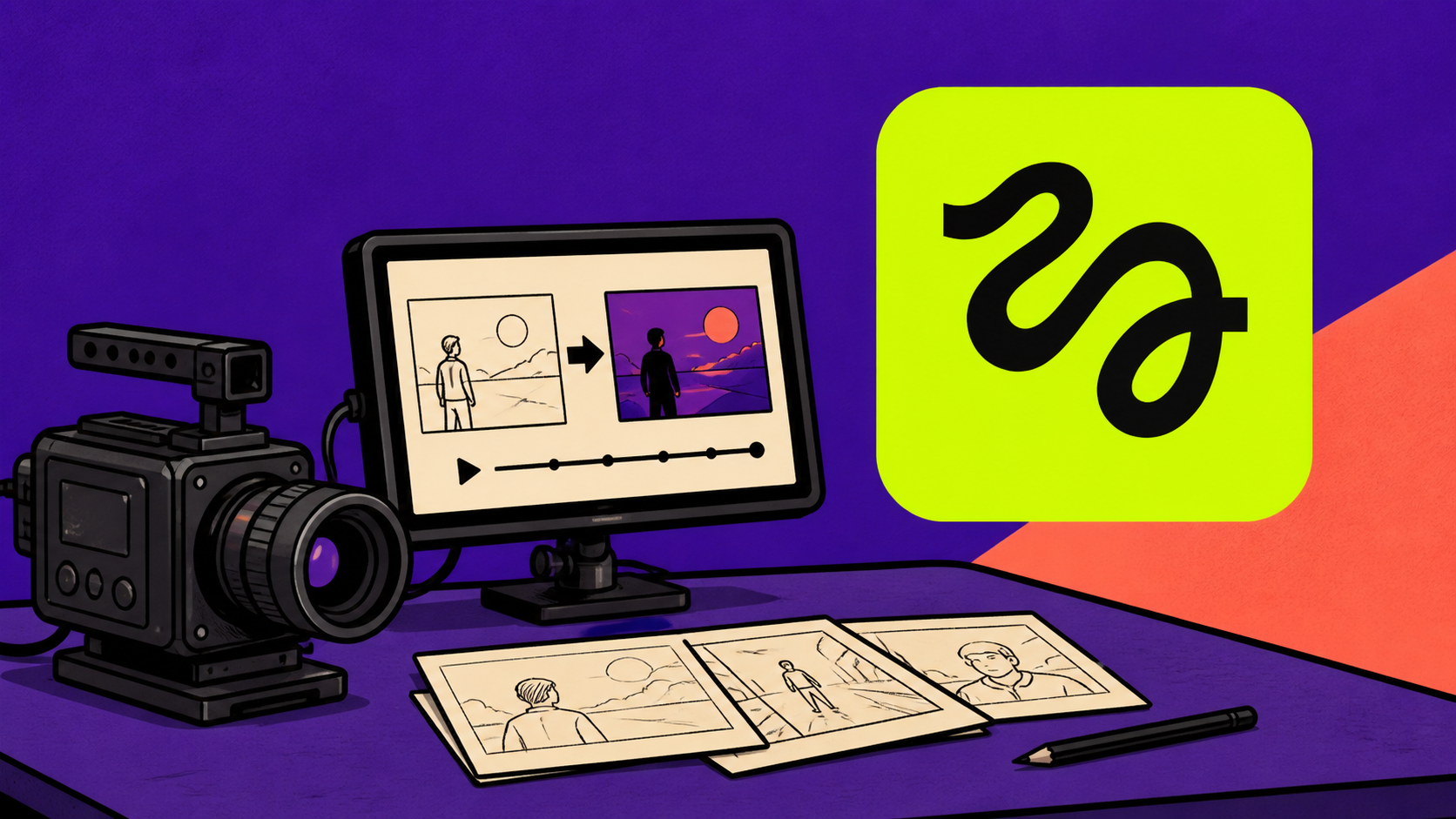
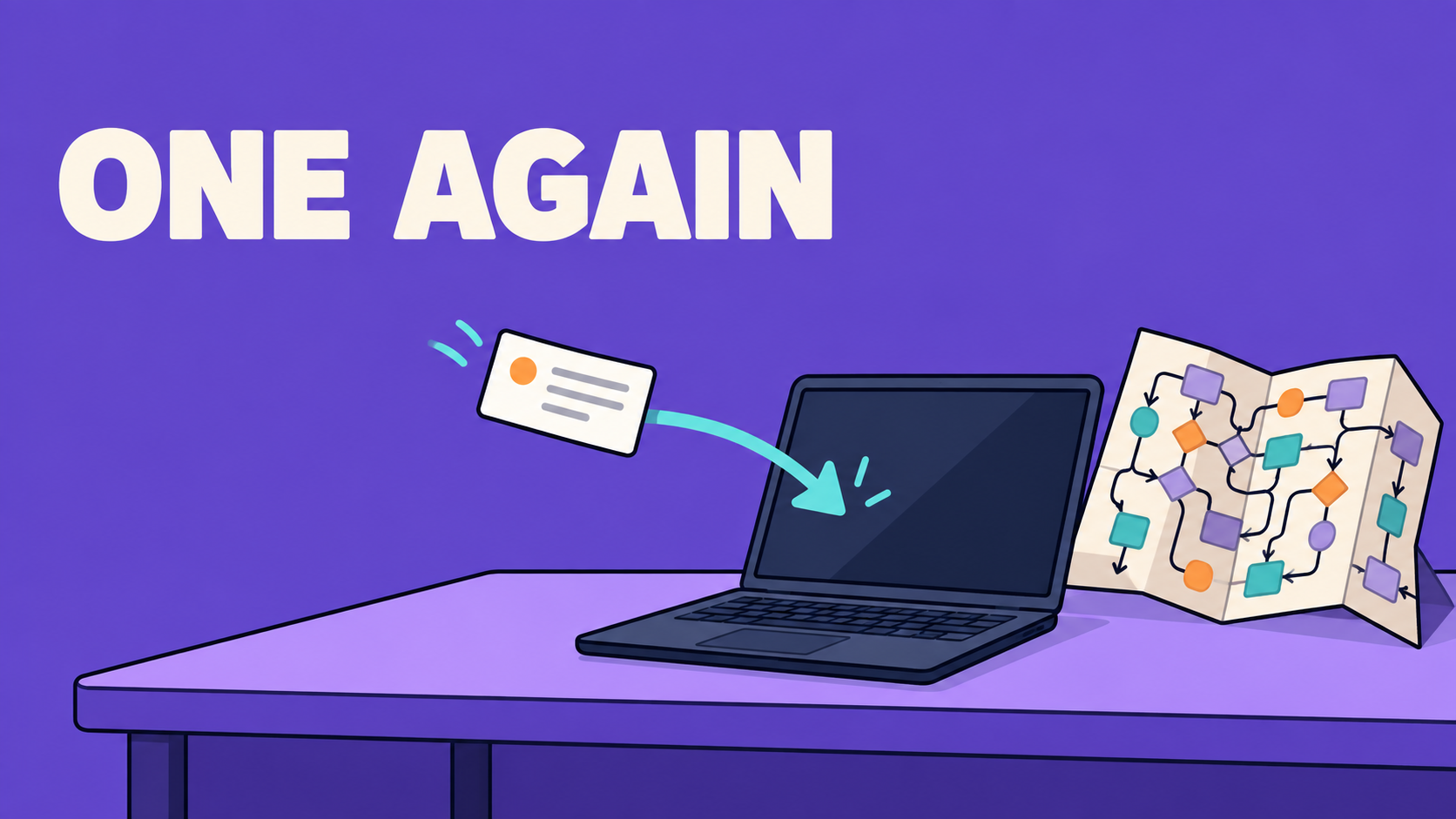
Dograh’s core feature is a no-code visual workflow builder. Conversations are modeled as nodes and edges, while telephony, speech-to-text, an LLM, and text-to-speech can be configured as part of an agent. Run records can include a transcript, recording, extracted data, and cost. Dograh also ships an MCP server that the company says can let clients such as Claude Code, Cursor, and Codex create, modify, and deploy voice agents.
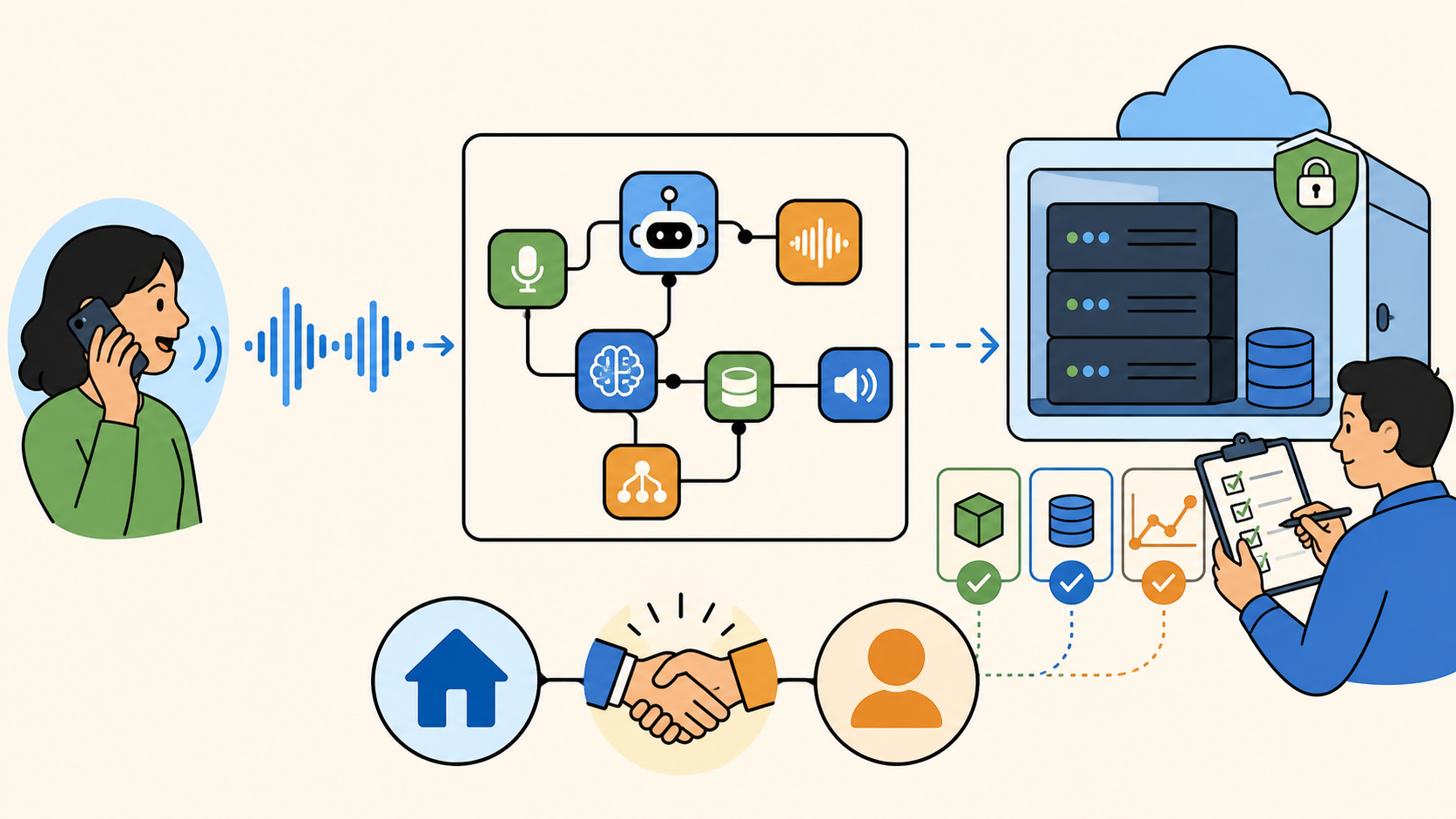
Self-hosting is valuable because the workflow and its operational boundary remain visible to the operator.
That description gives a better starting point than calling Dograh a chatbot. The product is a chain of services, and each link can affect reliability, cost, privacy, and debugging.
| Control point | What the public material says | What an adopter should verify |
|---|---|---|
| Deployment | The stack can run on a self-managed server or in a cloud VPC. | Which services, credentials, ports, and scaling rules are required? |
| Conversation flow | A visual graph connects telephony, STT, LLM, and TTS components. | How are timeouts, interruptions, retries, and fallbacks handled? |
| Data | Runs may contain transcripts, recordings, extracted data, and cost information. | What is retained, where is it stored, and who can replay a call? |
| Automation | The MCP server is described as a way to create, modify, and deploy agents. | Which actions need approval, and is every change auditable? |
| Economics | The repository describes free self-hosting alongside usage-based cloud hosting. | What do telephony, model, storage, and monitoring cost together? |
Openness is the product thesis
On its About page, Dograh names democratisation, precision, and openness as its principles. The repository lists a BSD-2-Clause license, free self-hosting, and usage-based cloud hosting. Its phrase, “Own the call,” captures the control it wants operators to keep over servers, models, and data.
Open source does not mean turnkey. A team that self-hosts still has to manage secrets, upgrades, call quality, logs, backups, consent, and incident response. That is not a criticism of Dograh in particular. It is the cost of moving the boundary from a hosted vendor to the team operating the system.
One user review, with a clear caveat
A Product Hunt reviewer who was looking for a self-hosted Vapi alternative said a basic agent was running after a weekend of trying it. The reviewer valued the open-source code and the ability to run the setup directly, but wanted more examples and starter templates for onboarding. That is one hands-on account, not a survey of the wider community.
The evidence therefore supports a narrow conclusion. Dograh’s public materials make control and self-hosting the central value proposition, while the available first-use signal points to onboarding as an area to inspect. They do not yet prove production reliability, low total cost, or a simple migration for every team.
A sensible first evaluation
An adopter should begin with one narrow call flow rather than a general “AI receptionist.” Define the permitted actions, record what the agent may store, test a failed tool call, interrupt the conversation, and inspect the resulting transcript and cost record. Then repeat the same flow after an upgrade or a model change. If the operator cannot explain what happened, self-hosting has not yet produced practical control.
Dograh is interesting because it treats ownership of the voice workflow as part of the product. That can be the right trade for teams that need control over deployment and data. The decision should be made with the full operating surface in view, not from the word “open-source” alone.