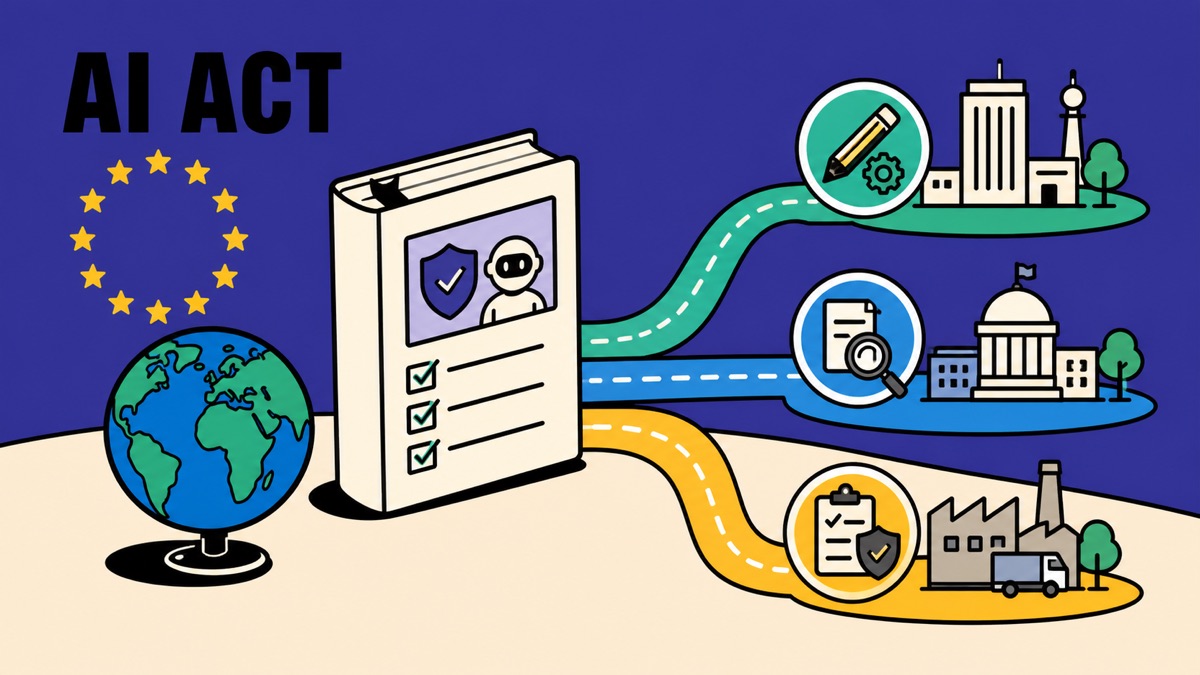
What stands out to me in the recent changes surrounding the EU AI Act is not the idea that Europe is trying to stop the AI industry. It is that the way an AI product is brought to market is itself becoming part of product design.
As of August 2, 2026, most provisions of the EU AI Act have entered the application and enforcement stage. The rules for high-risk AI, however, have been postponed until December 2027, while the deadline for high-risk AI embedded in physical products has been extended to August 2028. This means not every AI service is immediately subject to high-risk regulation. EU AI Act implementation timeline
Transparency is likely to be the first change developers notice. Users must be informed when they are interacting with AI, and AI-generated images, audio, video, and text must be marked in a technically detectable way. Deepfakes and AI-generated text that conveys information of public interest may also require separate disclosure. Article 50 of the EU AI Act
The United States is unlikely to follow the EU exactly
In my view, the United States is unlikely to copy the EU AI Act outright. The current US government has proposed preventing a patchwork of different state AI regulations and establishing a consistent federal policy. At the same time, it has kept its distance from mandatory government approval or blanket pre-release review of AI models. US national AI legislative framework, US executive order on AI innovation and security
Rather than removing regulation, the United States is more likely to shift where regulation is applied. Instead of requiring uniform approval before model release, it may strengthen security standards and accountability in areas connected to cybersecurity, critical infrastructure, government procurement, and national security.
The more important question in the United States is therefore likely to be not “Should this model be allowed to launch?” but “How safely is this model being operated, and who is accountable when something goes wrong?” Even if voluntary security standards and benchmarks are not legal requirements, they may become de facto conditions for participating in enterprise, government, and cloud markets.
South Korea is likely to take a hybrid path between the EU and the United States
South Korea is likely to adopt EU-style transparency and safety rules while also pursuing US-style policies that support industry growth.
South Korea’s AI Basic Act took effect on January 22, 2026, and covers high-impact AI, transparency for generative AI, safety, industry support, and international cooperation. The government has also said it will provide a grace period of at least one year, along with consultation and support systems, to help companies adapt. Government explanation of the AI Basic Act’s implementation, AI Basic Act enforcement decree and support policies
It would therefore be an oversimplification to say that South Korea is merely following the EU. I expect the language of its rules and its user-protection standards to grow more similar to the EU’s, while enforcement is combined with domestic policies for industry growth and support.
Korean companies planning to expand overseas will find it especially difficult to ignore the EU’s transparency standards. Domestically, however, grace periods, guidelines, and consulting services are likely to be offered alongside the rules to reduce the burden on companies. South Korea will try to balance regulatory compatibility with the EU against technological competitiveness with the United States.
What developers should review before deploying an AI service in the EU
First, determine whether you are simply a user of AI, a provider of an AI system, or a deployer operating the service in practice. Responsibilities and preparation may differ depending on whether you build your own model, connect to an external model API, or supply AI functionality for another company’s product.
Second, classify the intended purpose and area of application before looking at the model name. The same language model carries different levels of risk when used for basic document summarization than when used in recruitment, education, finance, healthcare, or public services. Whether an AI system is high-risk should be assessed based on its intended purpose and real-world context of use, not the model alone. EU regulatory framework for AI
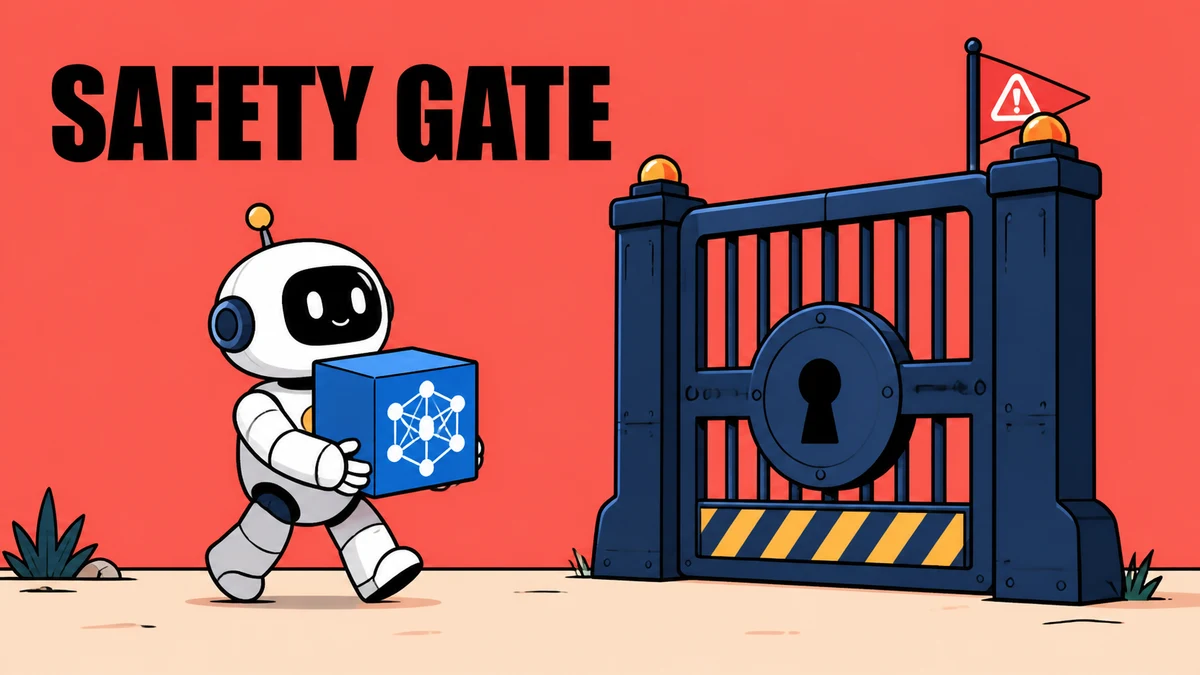
Third, build transparency features into the product from the beginning instead of adding them just before launch.
- Inform users that they are interacting with AI
- Apply machine-readable markings to AI-generated content
- Disclose deepfakes and synthetic content
- Label AI-generated text concerning matters of public interest
- Notify affected people when using emotion recognition or biometric categorization
Even when a marker is added to an image or video, its metadata may disappear as the content is shared across platforms. You need to confirm that the marking survives downloading, editing, and further processing through an API.
Fourth, maintain operational records for models and outputs. You should be able to track which model version was used, when it changed, which safety filters and external tools were connected, and how the service was stopped and recovered when a problem occurred. These records support legal response, but in practice they are also an operational tool for quickly analyzing failures and unexpected behavior.
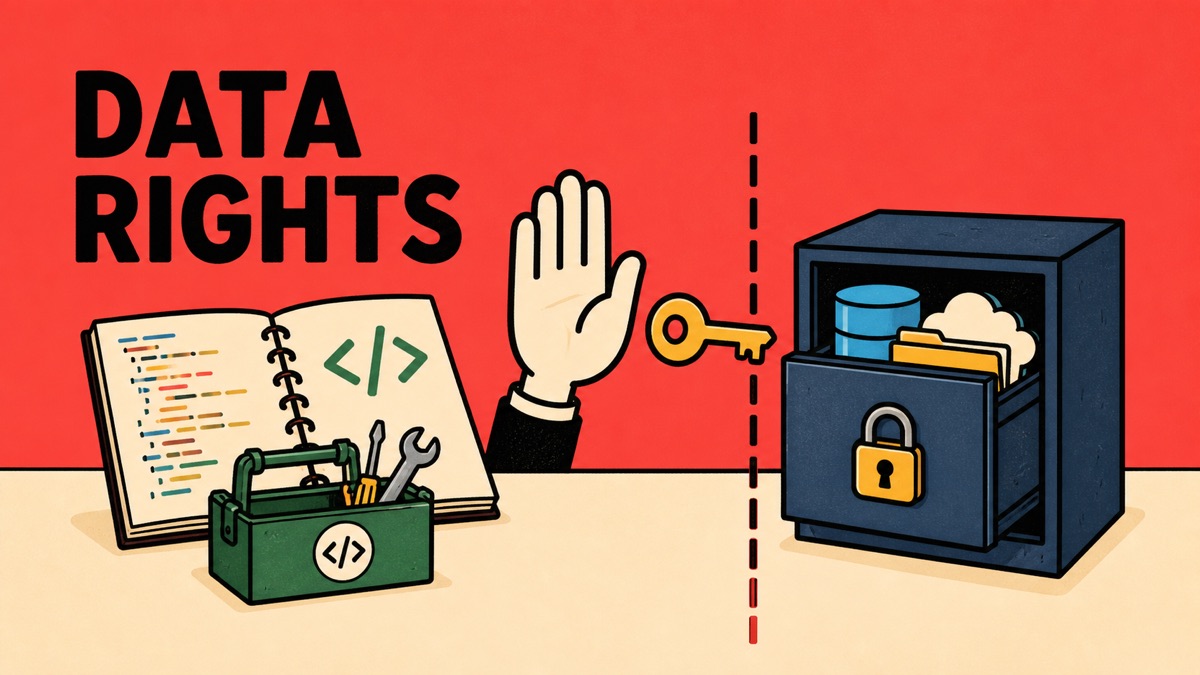
Fifth, review contracts with external model providers. Check where data is processed, whether inputs are used for training, whether the model can change without notice, and how notification and liability are handled when an incident occurs. An AI service is becoming a product that requires review of the entire supply chain, not something completed by connecting a single model API.
Sixth, avoid building EU functionality as a separate temporary patch. For Korean developers, I think the most practical approach is to raise the baseline for the global product and separate country-specific marking, log retention, user notification, and blocking policies into configuration. Building a compliance layer that can change from the start will cost less over time than maintaining separate EU-only code.
Ultimately, product defaults matter more than regulation
AI regulation is likely to develop with different regional priorities rather than converging on a single global standard.
The EU will focus on transparency, fundamental rights, and user notification. The United States will focus on innovation, security, and national competitiveness. South Korea is likely to reflect both approaches while pursuing industry support and compatibility with overseas markets.
For developers, the most important strategy is therefore not a one-time response tailored to a particular law, but a basic operating framework that can be applied in any market.
Users should be told when AI is being used. Generated outputs should be identifiable. Changes to models and data should be recorded. When something goes wrong, a person should be able to intervene or stop the service.
In my view, the EU AI Act’s greatest effect is not the fines themselves. It is the market standard it has set: AI must be built not as just another feature, but as a product that can be explained, traced, and controlled. The EU is likely to export regulation, the United States to export security and infrastructure standards, and South Korea to pursue compatibility between the two.
※ This article presents a policy outlook and a practical checklist. Before deploying in the EU, seek legal review tailored to the countries involved and the type of product.